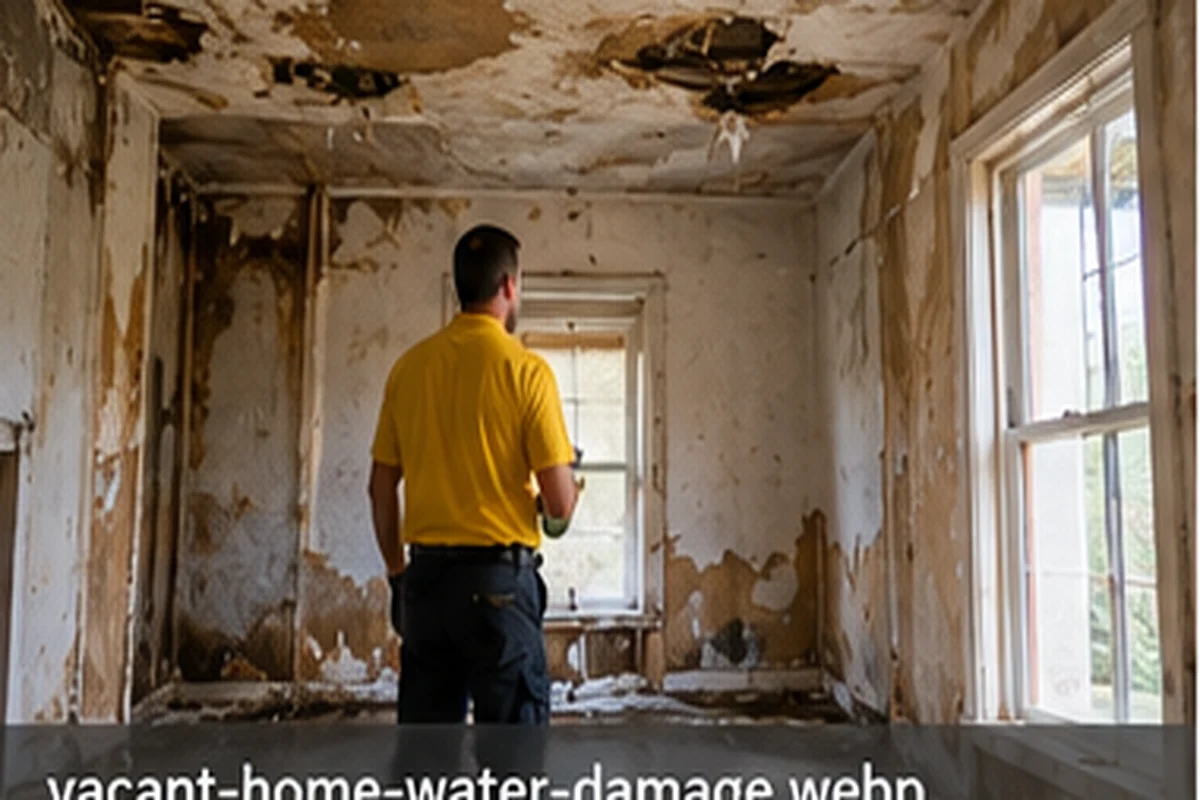
Short version: after a burst pipe, plan to check the attic insulation and ductwork, the ceiling, the walls below the break, the flooring, the cabinets and baseboards and anything stored nearby. Much of it can be dried in place, if it is done quickly, and a few things usually have to come out.
Why the wet spot is only part of the story
A burst pipe in a Sun City home usually lets go in the attic or inside an exterior wall, and gravity decides where the water goes. In the attic, it soaks the insulation, drips through the ceiling drywall and runs down the inside of walls. In a wall, it runs down the cavity between the studs, wets the drywall from behind and collects at the bottom plate, where the wall meets the slab.
By the time you see a stain on the ceiling or a puddle in the hall, the water has already traveled. It has moved through materials that hold it, and each of them has to be dried or removed. The longer it waits, the more of it moves into the framing and the flooring. Our guide to what to do after a water leak covers the first hour, from shutting off the water to taking photographs. This article picks up after that: what has to happen to the building itself.
The attic: insulation, ducts and framing
The attic is the first place to look, and it is the one homeowners are least able to inspect. Most Sun City houses have blown-in insulation, a layer of loose fiber spread across the ceiling joists. It does a good job keeping heat out, and it also holds an astonishing amount of water. Once it is soaked, it lies on top of the ceiling drywall, adding weight and keeping the drywall wet from above.
Wet insulation is generally removed rather than dried, because it is hard to dry in place and it compresses into a heavy mat. Removal also lets us see the framing and the drywall above, and it lets air reach those surfaces. If the attic holds air conditioning ductwork, as many do, we check the duct wrap and the connections, since insulated ducts can soak up water, and wet duct insulation that stays wet will continue to hold moisture against metal and framing. Wood framing and roof sheathing are dried in place with air movers and dehumidifiers, and we take readings before we leave.
Ceilings and walls
Ceiling drywall that has been soaked from above often has to be cut out. Wet drywall softens, sags and can fall, and the paper face is a food source for mold. Small stains on a ceiling that was wet only briefly can sometimes be dried in place, if the readings show it, but a ceiling that has visibly sagged, is soft to the touch or has been wet for more than a day or two is usually removed. We cut it in clean lines at a sensible height so that the repair is simple.
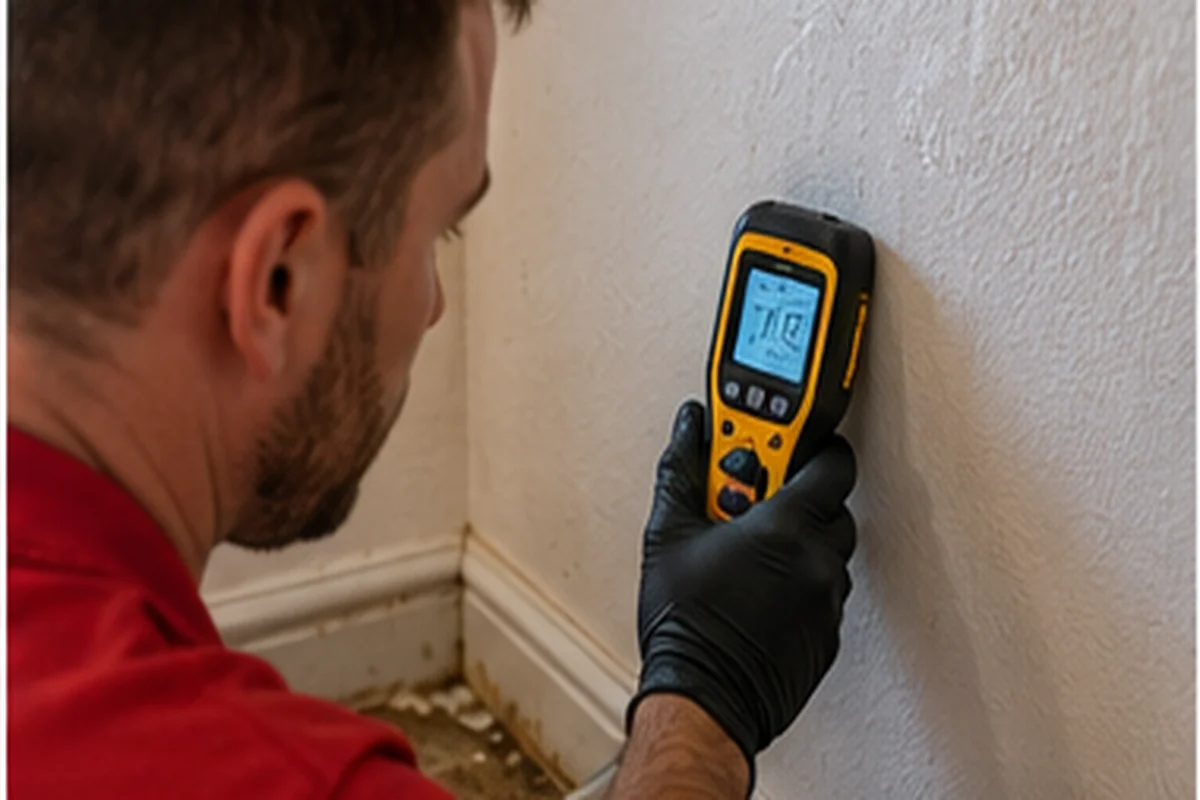
Walls need a different kind of attention. If water ran down inside a wall, the drywall may look dry on the surface while the cavity behind is wet. Moisture readings and a thermal camera tell us where the water is. Insulation inside the wall may need to come out. In many cases we open the wall by cutting a strip along the bottom, usually a foot or two high, which lets us dry the cavity directly, and then the drywall is patched. Our page on controlled demolition explains how we decide what has to be removed and how we keep the removal as small as the damage allows. A detailed moisture mapping survey is what lets us make those decisions with evidence.
Floors: carpet, tile, wood and laminate
What happens on the floor depends on what the floor is. Carpet that has been wet by clean water can sometimes be dried in place, with the pad lifted or replaced. If the water has been present for more than a day or so, or if it was contaminated, the pad is usually discarded, and the carpet may be saved only if it can be cleaned and dried properly.
Tile in Sun City is usually laid on a concrete slab, and the tile itself is not harmed by water. The risks are the grout, the bed beneath and the baseboards at the edges. Water can sit under tile and keep the slab damp, and drying systems that draw moisture up through the tile can help. Wood and laminate are the most sensitive. They can cup, buckle and split if they are wet and dried unevenly. Wood is often dried with mat systems that pull moisture out of the boards slowly, and the result is monitored for days. When water has been there too long, replacement is the honest answer. We explain how this works on our page about hardwood and tile floor drying.
Cabinets, baseboards and built-ins
Anything that sits on the floor or against a wet wall takes up water. Baseboards swell and the paint cracks. Cabinet bases, which are often made of particleboard, soak up water and swell, and once particleboard has swollen it does not return to its shape. If the water was clean and the exposure was short, we can sometimes drill small holes behind the toe kick to dry a base cabinet in place. If it has swollen or started to separate, the cabinet usually has to be replaced.
Built-ins, closets and shelving near the source deserve a look. Items stored on the floor of a closet, boxes in a garage and the carpet beneath a bed all absorb water that never shows on the open floor. Moving contents out of the work area, photographing them and listing them is part of the job, and it is covered by our contents pack-out service if the volume is large.
Electrical, light fixtures and ductwork
A burst pipe above a ceiling often means water inside a light fixture, a ceiling fan box or a bathroom exhaust fan. Water in these devices is dangerous, because the wiring can be energized even if the fixture looks dead. Keep the breaker off for the affected area until an electrician says it is safe. Outlets in a wall that was wet should be checked as well.
Air conditioning ducts and registers deserve the same attention. Wet insulation on ductwork, water in a register boot or a soaked return can carry moisture into the system, and if the unit is run before the water is dealt with, the system can spread moisture and odors through the house. We ask homeowners not to run the air conditioning in the affected area until we have checked.
What can be dried and what has to go
The deciding factors are the kind of water, how long it was in contact with the material and what the material is. Clean water from a supply line is the best case, and it means that many materials can be dried in place if the work starts quickly. Porous materials that are soaked for long periods, such as insulation, carpet pad and particleboard, are more likely to be removed. Hard materials, such as framing, concrete, tile and solid wood, are usually dried and saved.
The honest approach is to measure rather than guess. We take readings at the start and during the job, and we compare them to a normal reading for each material in your home. If a material dries to its normal range, it stays. If it does not, or if it has been damaged beyond recovery, we tell you, show you the readings and explain why. We would rather say a material is lost on day one than run equipment for a week on a ceiling that was never going to dry.
How long the drying takes, and how we know it is done
Most residential freeze losses take about three to five days to dry, although it depends on how much water there was, which materials got wet and how humid the air is. Thick materials, such as a concrete slab or a solid wood floor, take longer than drywall. Equipment runs continuously, and we visit each day to take readings and adjust the placement.
Drying is finished when the materials reach their normal range, and not when a certain number of days has passed. We write the readings down, and when they are normal, we remove the equipment. You get a record of the process, with dated photographs, readings and a list of what was removed. The full process is described on our page about structural drying.
When mold comes into it
Mold is the secondary risk of any water loss, and in a freeze loss it is a particular concern, because the water is often hidden in an attic or a wall. If the water is dealt with quickly, mold rarely has the chance to start. If a leak ran for a long time, perhaps in a house that was empty, we look for signs and recommend an inspection. Our guide on mold in a dry climate explains why a desert home is still at risk, and the mold removal overview explains what the work involves if growth is found.
Documenting a freeze loss for your insurer
Freeze damage claims are often handled with a lot of questions, about the cause, the timing and whether the home was heated. Good records help. Photograph the break and the damaged areas before anything is removed. Keep the damaged pipe if the plumber replaces it. Write down when the cold snap happened, when you found the water and what you did. Ask your plumber for a written note describing the failure.
We keep our own records: moisture readings from the first visit, daily logs, equipment placement, photographs and a list of materials removed, and we give you a copy. We cannot decide what an insurer will cover, and we do not predict it. We can make sure the facts are complete and organized when the claim is reviewed.
Preventing the next one
Most freeze losses are preventable with a small amount of work in the fall. Insulate exposed pipes in the attic, garage and exterior walls, cover hose bibs, and know where your main shutoff is. When a freeze is forecast, open the cabinet doors under sinks on exterior walls and let a faucet drip. If you leave the house for long, set the heat, and ask someone to check the house on cold nights. We cover all of this in our guide to frozen and burst pipe damage in Sun City, AZ, and our page on frozen and burst pipe restoration describes the work we do after a failure. If you leave your house for the season, our checklist for leaving a Sun City home goes through the steps.
Questions
Can wet insulation be dried instead of replaced?
Occasionally, for a small, recent exposure, but blown insulation that has been soaked usually compresses and stays wet, so removal is the usual approach.
Do I need to open every wall?
No. We use moisture readings and a thermal camera to decide where to open, and we aim to open as little as the damage requires.
Will my ceiling stain go away?
If the drywall dries and the stain is only on the surface, it can be sealed and painted. If the drywall is damaged, it is replaced and refinished.
Who repairs the pipe?
A licensed plumber does. We coordinate with your plumber so that drying and the repair fit together.