Short version: shut off the water at the main valve, turn off power to any wet area if you can do it safely, photograph everything before you move it, and then call a plumber and a restoration company. Do not try to dry a wall by yourself with towels and a fan, and do not wait to see if it dries on its own.
The first ten minutes: stop the water
Before you do anything else, find out whether the water is still coming. A pipe that is actively leaking will keep adding to the damage every minute you spend taking photographs or calling around, so the main shutoff valve comes first. In most Sun City homes, which are single-story ranch houses built on concrete slabs, the main valve sits near the front of the house, close to the hose bib, or on the side wall near the water meter box at the curb. It is usually a round handle or a lever. Turn a round handle clockwise until it stops, and turn a lever a quarter turn so it sits across the pipe.
If you cannot find the main or it will not turn, go to the meter at the street, lift the lid and use the shutoff there, which often needs a special key or a large wrench. It is worth finding both now, on a dry day, because the morning you need them is a bad time to learn where they are. Our guide to burst pipe cleanup explains what happens next when a supply line is the source.
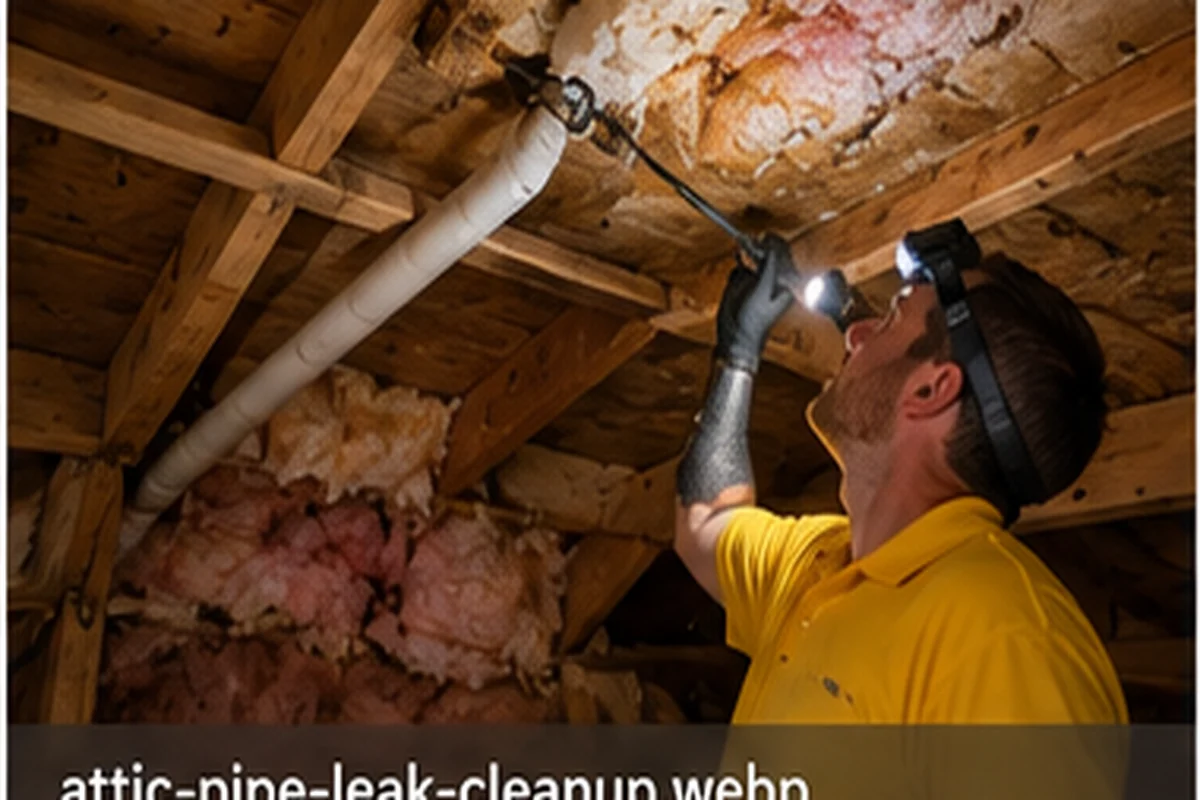
Some leaks do not come from a pipe. A failed water heater, an air conditioner that is overflowing its drain pan or a toilet supply line each have their own local shutoff, and sometimes the fastest fix is simply to close the small valve under the toilet or turn off the heater's cold water inlet. If the water is coming from the roof or around a window after a storm, there is nothing to shut off, and the job is to catch it, contain it and keep it away from electrical equipment while you wait for the weather to pass.
Safety comes before cleanup
Water and electricity are a dangerous mix, and a wet house in Sun City often has both in the same place. Outlets sit low on the walls, light fixtures hang from ceilings that may be holding water, and the electrical panel is commonly in a garage or a utility closet that could be affected. If the water is near outlets, a ceiling fan or a light fixture, go to the panel and switch off the breakers for that part of the house, but only if you can reach the panel without stepping in standing water. If the panel itself is wet or the floor around it is flooded, stay out and call an electrician.
Look up as well as down. A ceiling that is sagging, bulging or dripping is holding a lot more weight than usual, because drywall and insulation soak up water like a sponge. It can come down without warning. Keep people and pets out from under it, and if you can do it safely, poke a small hole at the lowest point of the bulge so the water drains into a bucket instead of releasing all at once. Wear shoes, because wet floors are slippery and sometimes hide nails or broken tile.
Finally, think about what kind of water you are dealing with. Water from a broken supply line is clean when it comes out of the pipe, but it picks up dirt, dust and bacteria as it moves through a house. Water from a sewage backup, a toilet overflow with waste or flooding from outside is contaminated from the start and needs different handling. If there is any chance the water is dirty, keep children and pets out of it, avoid touching it with bare skin and read about sewage backup cleanup before deciding anything else.
Document everything before you move anything
The photographs you take in the first half hour are some of the most useful records you will have. They show your insurer what the house looked like before anyone touched it, and they help a restoration company understand how far the water traveled. Walk through the house with your phone and photograph each wet room from the doorway, then take close-ups of the source, the wet floor, any stains on walls and ceilings, damaged furniture and anything you plan to throw out. A short video, narrated as you go, is also worth taking.
Write down a few facts while they are fresh: when you discovered the leak, when you last knew the area was dry, when you shut the water off and what you did afterward. If you can read the water meter, note the number. These small details help the plumber find the cause, and they help an adjuster understand how long the water ran. Keep every receipt for anything you buy or pay for, from towels to a plumber's visit.
What you can safely do yourself
Once the water is off and the area is safe, there is a limited amount you can do that actually helps. Remove standing water if there is only a thin layer, using a mop, towels or a wet vacuum that is rated for water. Lift small rugs and anything else that will hold moisture against the floor, and move them somewhere dry. Furniture that cannot be moved can be set up on blocks or squares of aluminum foil so the legs are not sitting in water, which stops stains and rust from spreading.
Take books, papers, photographs and electronics out of the wet area, and set valuable items on a dry, high surface. Pull curtains away from wet floors, and open the doors to cabinets and closets near the source so air can reach them. If it is dry outside and safe to do so, open a window. In summer, though, the outside air in Sun City can be hot and the cooling system is working hard, so ask the restoration company how they want the air conditioning handled before you make big changes.
Some things look helpful and are not. Running a household fan across a wet wall pushes moisture around and can spread contamination. A household vacuum is not made for water and is a shock hazard. A hair dryer or a heat gun on a wet floor can warp wood and crack tile, and it dries the surface while leaving the moisture underneath. We cover this in more detail in our guide to structural drying, which explains what professional equipment does differently.
Calling the right people, in the right order
It helps to know in advance who does what. A plumber finds and repairs the source, whether that is a pipe, a fitting or a valve. A restoration company, like us, removes the water, dries the structure and documents the loss. An electrician checks the wiring if water reached outlets or the panel. And your insurance company, if you plan to file a claim, starts the process on its side.
Most people call a plumber first, because the leak has to be fixed before anything else makes sense. It is fine to call a restoration company at the same time. If you live in an association-managed property or a condo, let the manager know right away, because the building may have its own shutoff, its own insurance and rules about who can work in common areas. Tell your insurer as soon as you can, and ask what they need from you. We cannot decide what a policy covers, and we do not promise what an insurer will approve, but we can give you the records they will ask for.
Our office hours are Monday to Friday, 8 AM to 7 PM. If you discover water outside those hours, do everything in this guide that stops the damage, shut off the water, document the loss, and call us when we open. If water is still coming in and you cannot stop it, call a plumber who offers after-hours service, and call us as soon as the office is open.
What happens when we arrive
When we get to the house, the first thing we do is look at the building rather than at the puddle. We confirm the water is off, check for electrical hazards, and walk through every room so we know how far it traveled. Water in a slab home tends to run along the floor, soak into the bottoms of the walls and spread into the next room, so a leak that looks like a small wet patch in a hallway often turns out to affect baseboards, drywall and flooring in three or four rooms.
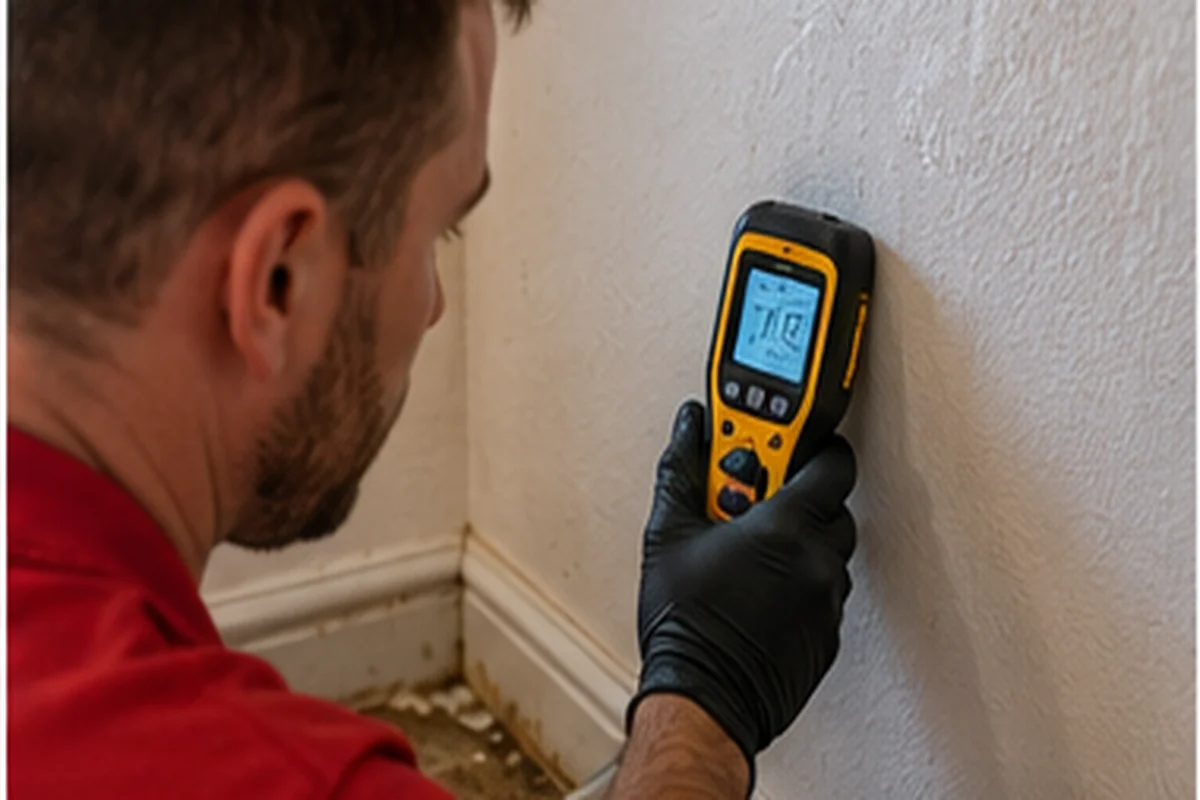
We take moisture readings in the walls and floors and use a thermal camera to find damp areas that are not visible. That is the heart of moisture mapping, and it is what lets us write an honest scope instead of guessing. Then we remove standing water with pumps and extractors, take out materials that cannot be saved and set up dehumidifiers and air movers to dry what can. We check readings each visit, and we only take the equipment out when the materials are back in a normal range. The full process is described on our pages for emergency water extraction and structural drying.
Why the first 24 to 48 hours matter in Sun City
Water damage gets worse with time, and the clock runs a little faster in a closed-up air-conditioned house. Drywall wicks water upward, so a wall that was wet at the bottom can be damp a foot higher within a day. Baseboards swell, paint bubbles and carpet pad starts to break down. Wood floors can cup and tile can loosen from its bed.
Mold is the other reason to move quickly. It is common to hear that Arizona's dry climate keeps mold away, but inside a sealed house the humidity near a wet wall can stay high for weeks. Mold can begin to grow on wet drywall, wood and carpet backing within a day or two, which is why drying in the first couple of days is so important. Our guide on mold in a dry climate explains how it happens and what to look for. If water has been sitting for longer than that, the situation is different, and mold inspection becomes part of the conversation.
If the leak happens when nobody is home
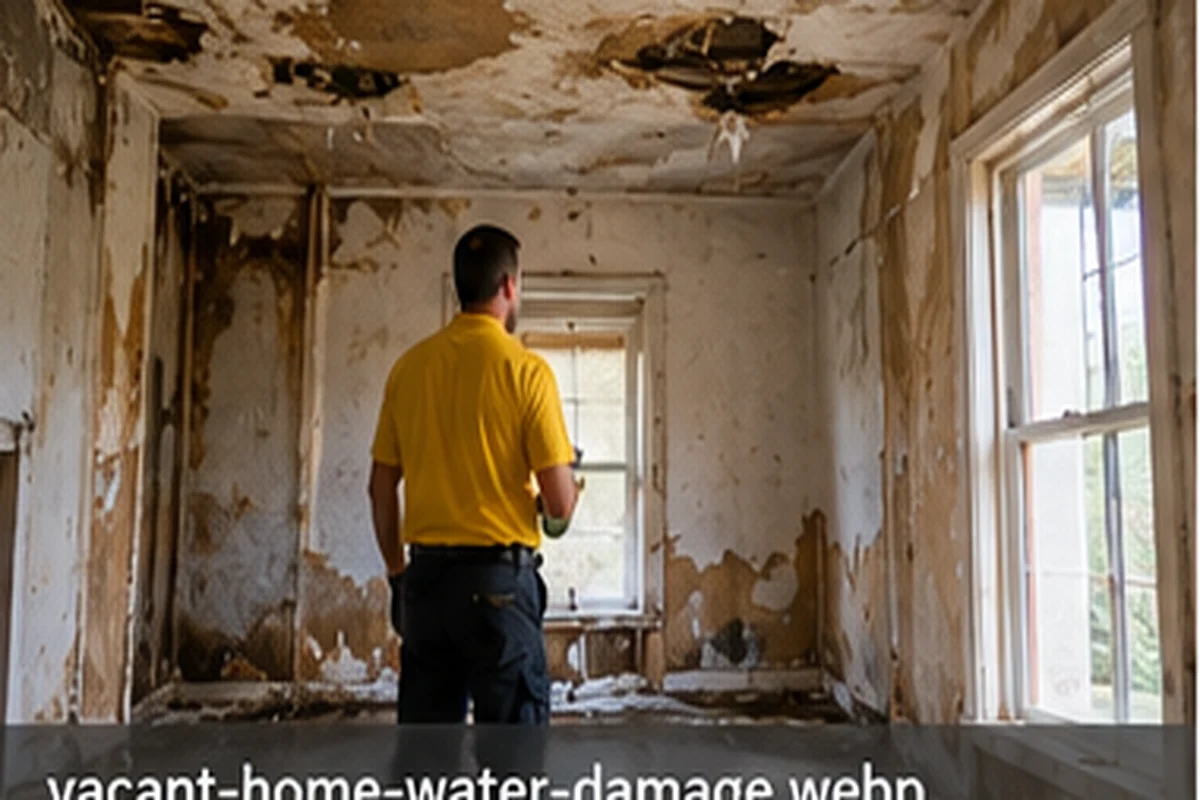
Many homes in Sun City are empty for part of the year, and a leak in an empty house is the most expensive kind, because it can run for days or weeks before anyone sees it. If you are one of the many owners who leave for the summer, read our guide on leaving your Sun City home for the season, which covers shutting off water, leak sensors and who should check the house. If a neighbor, a property manager or a house-sitter finds water, they should shut off the main and call you, and then call us. We will take photographs, readings and a written scope, send them to you, and wait for your approval before removing anything. That process is explained in detail on our page about vacant and snowbird home leak remediation.
What to ask any restoration company before you agree
Water damage is stressful, and it is easy to say yes to the first company that answers. A few questions will tell you a lot. Ask how they decide what has to be removed and what can be dried in place, and whether they take moisture readings before, during and at the end. Ask what records you will receive, and whether they work with your plumber and your insurer. Ask for a written scope that separates the work they will do from work a plumber or a contractor will do. And ask what the company cannot do. A company that is honest about its limits is usually honest about everything else.
Our page about pricing explains how we scope jobs, and you are welcome to send us the details of a leak and we will tell you what we would need to see.
Questions
Should I turn off the electricity if my floor is wet?
If water is near outlets, fixtures or appliances, switch off the breakers for that area at the panel, but only if you can reach the panel without standing in water. If you cannot, stay out and call an electrician.
Can I just let the water dry on its own?
In a closed, air-conditioned house, that rarely works. Water soaks into the lower part of walls and under flooring, where it stays damp for weeks. Surface dryness is not the same as dry materials, and moisture readings are the only reliable way to tell.
How long before mold starts?
Mold can begin to grow on wet drywall, wood and carpet backing within a day or two. Quick, thorough drying is the best protection.
Do I need to move out?
Often not, but it depends on how far the water spread, whether it was clean or contaminated and whether the work area is safe. We tell you what we recommend after we see the house.